You need a Rockford asphalt contractor possessing local soil knowledge and freeze-thaw expertise, offering complete services from design to striping. Require ground analysis, compression analysis, professional drainage design, correctly engineered mixture formulations, temperature control, and validated compaction levels. Demand clear project outlines, detailed price breakdowns, detailed timelines, climate-related postponement guidelines, and regulation-compliant traffic safety measures. Validate Illinois licensure, insurance, OSHA-trained leadership, performance-based guarantees, and track record on similar work. Ask for testimonials, maintenance outcomes, and modification records to ensure long-term quality-further benefits await.
Core Takeaways
- Choose a reputable Rockford expert with established freeze-thaw expertise, strong municipal relationships, and responsive crews for seasonal and emergency maintenance.
- Deliver full-service solutions ranging from design to striping for commercial, residential, and municipal developments, incorporating ADA compliance, traffic management, and evening work solutions.
- Require documented QA/QC: covering compaction and soil analysis, drainage design, density testing, and detailed punchlists at all stages of the paving process.
- Demand detailed estimates containing comprehensive documentation covering quantities, mix specifications, thickness requirements, timeline milestones, weather contingencies, unit costs, exclusions, and progress-based billing.
- Verify credentials and trustworthiness: verification of Illinois licensing, insurance coverage and bonding through insurers, references from local clients showing 1-, 3-, and 5-year performance outcomes.
Benefits of Working with a Local Rockford Asphalt Specialist
While national paving companies might seem attractive, a local Rockford asphalt specialist offers the detailed focus your project needs. You receive local knowledge based on Rockford's soil profiles, freeze-thaw patterns, and municipal requirements, making sure your pavement design, asphalt mixture, and compaction strategy match actual site conditions. Your contractor's established local connections expedite regulatory processes, quality checks, and infrastructure planning, minimizing delays and corrections.
You also gain immediate assistance. When weather changes occur or equipment problems arise, a nearby crew takes immediate action, modifies timelines, and secures fresh lifts before surface integrity is affected. Should you experience emergency maintenance issues-pavement defects, wear, or joint issues-a local team reinforces the area, improves ride quality, and reduces liability fast. You receive accountability, clear communication, and solutions that maintain quality throughout the years in Rockford.
Complete Paving Expertise for Homes, Businesses, and Municipal Projects
From initial design to final striping, we provide a comprehensive paving program designed for your site, use, and budget-whether it's a driveway, retail lot, industrial yard, or city roadway. We develop surface structures to accommodate traffic loads, climate, and life-cycle targets, then execute efficiently while minimizing interference.
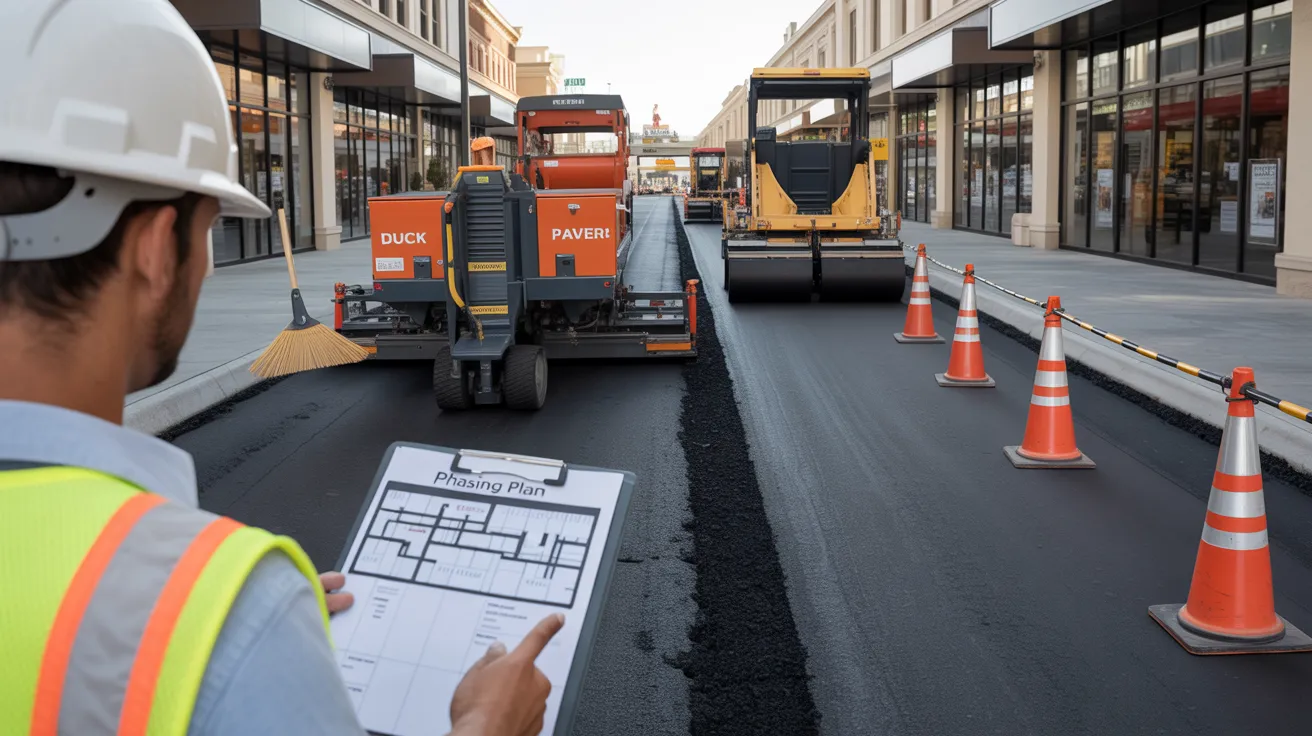
For residential properties, we install durable, high-quality driveway surfaces, including green alternatives like permeable driveways that reduce runoff and meet local stormwater requirements. In the business sector, we deliver ground-up projects, mill-and-overlay, crack sealing, sealcoating, ADA-compliant upgrades, phasing plans, and night work to ensure customer access. For municipal projects, we handle arterials, alleys, and bike paths with comprehensive specifications, traffic control, and pavement markings that meet MUTCD standards. You'll get complete documentation of materials, compaction reports, and warranties that protect your investment.
Understanding the Value of Site Preparation and Water Management
You safeguard your pavement investment by initiating with detailed soil assessment, verifying load-bearing capacity, compression specifications, and frost-susceptibility. We grade to designated slopes and tolerances, creating elevations that push water away from facilities and pavement edges. With carefully planned drainage-subsurface bases, perimeter drainage, and appropriately dimensioned inlets-you prevent ponding, decrease freeze-thaw damage, and prolong service life.
Essential Soil Evaluation Guide
Prior to ordering asphalt materials, a comprehensive soil evaluation creates the basis for pavement that stands the test of time. You need to know what's underneath your project, how it performs under stress, and how it will maintain the base course. Our process starts with soil sampling to identify classification, moisture content, and plasticity index. This information guides our decisions regarding substrate reinforcement, undercutting, or synthetic reinforcement.
Next, we confirm ground stability and uniformity through soil compaction analysis, verifying that required compaction levels are reached and consistent across the site. We examine subgrade variability, identify weak areas, and verify material depths match requirements. Correct grade levels are verified to prevent irregular settling and early deterioration. With reliable testing, properly maintained tools, and comprehensive documentation, you get a reliable, even subgrade ready for robust asphalt installation.
Effective Water Management
After confirming the subgrade is verified and stable, water management becomes the next critical factor. It's essential to establish precise grading that provides adequate slope away from buildings and channels runoff to designated drainage paths. We set proper elevations to maintain proper crossfall, eliminate standing water, and protect the pavement structure from moisture damage that speeds up fatigue and raveling.
We implement drainage solutions that match your site's hydrology. Water management systems provide rapid water movement, while bioswales slow, filter, and infiltrate flows to minimize peak discharge. Where possible, permeable paving provides storage and infiltration, decreasing load on storm sewers and optimizing winter performance by reducing surface ice. We choose geotextiles, base gradations, and outlet locations to prevent material displacement. The result: improved durability, reduced service calls, and consistent upkeep.
Asphalt Installation Best Practices for Durable, Smooth Surfaces
Although every project site is unique, quality , smooth asphalt requires meticulous preparation and rigorous process control. You get reliable results by validating subgrade strength, precise grading, and required densities before laying asphalt. Select the optimal mixture selection for traffic demands, weather conditions, and pavement depth; we verify proper binder grade and aggregate gradation to minimize segregation and rutting.
During placement, temperature control is non-negotiable. We carefully monitor haul, mat, and screed temperatures to maintain optimal compaction conditions and eliminate thermal degradation issues. Execute proper compaction procedures-set up systematic rolling sequences, select appropriate rollers for each lift, and reach target density using properly calibrated machinery. Perform joint installation with precise, even edges, proper tack coat, and correct seam overlap to secure joints, prevent permeability, and ensure even surface quality.
Pavement Preservation: Sealcoating, Crack Repair, and Maintenance Solutions
Preserve your assets and minimize wear with high-quality sealing treatment that repels harmful UV rays, moisture, and winter treatments. Block water infiltration and structural problems by filling existing fissures with hot-pour, rubberized materials specifically selected for crack dimensions. Our team will recommend optimal solutions so your pavement lasts longer, looks cleaner, and lowers lifecycle costs.
Advantages of Seal Coating
Strategic sealcoat application, paired with regular maintenance and crack repair, safeguards your pavement from oxidation, UV exposure, moisture, and de-icing chemicals while extending service life. You gain UV protection that minimizes binder breakdown, prevents raveling, and sustains asphalt flexibility under Rockford's winter temperature fluctuations. The treated asphalt prevents water intrusion, limiting structural deterioration and pothole creation.
Sealcoating offers a sleek, dark appearance that boosts visual appeal and line marking clarity. This treatment minimizes surface degradation from vehicles and plowing, while lowering lifecycle costs and increasing the time between major repairs. The darker surface promotes faster snow melting, boosting safety during winter months. Regular applications based on traffic patterns and environmental conditions optimize performance and budget planning, maintaining your surface in prime condition longer.
Quality Crack Sealing
Right after sealcoating, thorough crack sealing addresses the primary pathway for water infiltration and pavement breakdown. We prevent subbase erosion by clearing, routing where needed, and filling cracks before moisture and deicing chemicals penetrate. Our team analyzes crack size, displacement, and concentration to determine the right technique and products.
For cracks that experience thermal expansion and contraction, we advise applying polymer-modified hot-pour sealants with appropriate overbanding for optimal flexibility and adhesion. When handling minimal movement cracks or lower temperatures, we deploy cold-application sealants that cure quickly and minimize downtime. Joint preparation is critical: dry surfaces, compressed-air cleaning, and temperature-controlled application guarantee bond integrity.
You'll experience reduced raveling, fewer potholes, a smoother ride, and increased service life, reducing life-cycle costs while protecting your latest sealcoat investment.
Evaluating Contractor Qualifications, Experience, and References
Before accepting a paving contract, ensure that a Rockford asphalt contractor maintains current Illinois licensure (where applicable), sufficient insurance coverage, and any required bonds; then verify these details straight with the insurer or issuing authority. Complete formal license checks and obtain proof of insurance with you as the certificate holder.
Review experience through a detailed portfolio review: demand photographs of projects, detailed scopes, pavement specifications, mixture specifications, and machinery lists. Inquire about similar projects in Rockford's climate, featuring cold weather durability and upkeep outcomes at 1-, 3-, and 5-year periods. Examine field management history-foreman tenure, OSHA certifications, and product credentials.
Thoroughly examine references. Get in touch with municipal representatives, owners, or property managers. Ask about timeline management, site safety standards, frequency of change orders, density measurements obtained, how drainage handles storm conditions, and resolution of punch list tasks.
Straightforward Estimates, Scheduling, and Project Communication
After thoroughly evaluating credentials and past performance, you deserve the same level of thoroughness in how a Rockford asphalt contractor manages the planning, costing, and implementation of your project. Request a comprehensive written scope that includes volume requirements, mix specifications, dimensions, traffic control, drainage adjustments, and disposal methods. Insist on detailed pricing information: unit costs, labor rates, equipment charges, setup costs, allowances, and limitations. You should receive an itemized schedule outlining critical stages-ground preparation, asphalt laying, compression, cure times-and explicitly stated dependencies.
Define communication protocols prior to project start. Appoint a dedicated project coordinator, determine meeting cadence, and define escalation procedures. Implement daily status reports, formal modification protocols, and weather-delay criteria tied to schedule modification procedures. Confirm QA/QC steps: density testing, yield checks, and final inspection lists. Connect billing to measurable deliverables, not arbitrary percentages. This structured discipline protects project costs and scheduling.
Enduring Worth: Warranties, Service, and Maintenance Tips
Although paving quality sets the foundation, long-term value depends on warranty enforcement, timely repairs, and systematic maintenance. You should obtain written warranty documentation that specifically details coverage limits, workmanship scope, materials, and warranty periods for all pavement layers. Link these specifications to concrete benchmarks like density measurements and temperature logging.
Repair cracks and raveling quickly. Seal thin cracks under 1/4 inch, address broader cracks with appropriate sealing, and fix potholes using well-bonded and compacted hot mix. Only begin sealcoating once ensuring proper cure time, and get more info don't over-seal.
Establish service intervals according to traffic volume, weather exposure, and drainage conditions. Maintain supported edges, clear drainage systems, and add compatible protective layers. Schedule regular inspections, implement thermal restoration where possible, and record every intervention to preserve warranty validity.
FAQ
What Permits or Zoning Approvals Are Required for My Paving Project?
Before starting any construction work, you'll need necessary permits and zoning sign-offs and clearance for changes to shared access points. Make sure to verify access rights for driveway installations and utility placements. Confirm adherence to stormwater management, erosion prevention measures, and public roadway safety measures. Examine and verify building setbacks, lot restrictions, and water absorption rates. Submit detailed project plans, technical specs, and schedules. Wait to start until permits are approved and inspections are scheduled.
What Impact Do Weather and Temperature Windows Have on Project Start Dates
Similar to a precision timepiece, environmental conditions and temperature thresholds establish the optimal start time. The project demands dry conditions, consistent meteorological outlooks, and ambient and surface temperatures typically between 50-90°F. Colder seasons impose weather restrictions, increasing curing duration and pushing back mobilization; high temperatures may necessitate overnight scheduling to control material heat and achieve correct compression. Precipitation threatens binder effectiveness and may create finishing defects, so we coordinate around precipitation. We track meteorological predictions and ground temperatures to establish the soonest reliable beginning.
Do You Provide ADA-Compliant Solutions for Parking Areas and Pathways?
We offer complete ADA compliance accommodations for walkways and parking areas. You'll receive regulation-conforming slopes, cross-slopes, and widths; properly located accessible parking stalls with van-access aisles; regulation-standard signage and pavement markings; continuous accessible routes from parking to entrances; and safety markers with tactile indicators at pedestrian crossings and curb cuts. Our team verifies grades using laser levels, detail changes in level, and arrange inspections to meet federal, state, and local standards while reducing impact.
What Methods Are Used for Recycling and Disposing of Old Asphalt?
You'll benefit from our closed-loop methodology: we carefully cold mill existing pavement, segregate and process clean RAP for recycling and incorporate it into new hot-mix following DOT gradation specifications. We carefully verify moisture content, binder properties, and contamination prior to batch processing. For millings reuse, we densify filtered millings for low-volume surfaces or base courses, applying necessary stabilization measures. Any unusable material is transported to certified facilities with detailed tracking. We minimize transportation distances, maintain effective dust suppression, and maintain detailed volume records for complete project compliance.
How Does Construction Affect Adjacent Properties and Access During Projects
Construction operations may briefly affect adjacent properties and accessibility, but you won't lose access; we'll arrange activities to provide interim entry and proper navigation. To manage noise concerns, we implement noise control methods: optimized machinery, limited construction periods, and acoustic barriers where needed. You'll be given forward planning updates, transportation route plans, and coordinated delivery schedules to prevent bottlenecks. We'll safeguard adjacent surfaces, control dust with water trucks, and ensure ADA-compliant paths. Any access disruptions are temporary, scheduled, and properly announced.
Final Thoughts
Picking a reputable Rockford asphalt contractor sets up your project for lasting results and value. You'll receive precise grading, optimal drainage, and ASTM-compliant installation that minimizes rutting and raveling. Here's a significant statistic: timely sealcoating can prolong pavement life by up to 50%, reducing lifecycle costs substantially. When you demand clear estimates, credentialed crews, and preventive maintenance plans, you secure your investment. Partner with a local expert—and enjoy quality, reliability, and professionalism from day one.